Few classes of medicine have reshaped the weight-loss conversation as thoroughly as the new GLP-1 drugs. But prescription-only access, cost and side effects have left millions of people asking the same question: is there a natural way to pull the same lever — blood sugar?
The phrase "natural Ozempic" has been circulating on social media for months and has been attached to a dozen different substances. We went through the evidence to see what holds up under sober scrutiny — and why, of all things, your morning coffee has a part to play.
Why everyone is suddenly talking about blood sugar
For a long time, blood sugar was considered a topic for people with diabetes. That has changed. Metabolic research over the past few years has shown that in metabolically healthy people too, it is the variability of blood glucose that matters — not just the average.
The mechanism behind it is unglamorous but consequential. A carbohydrate-heavy meal pushes blood glucose up. The pancreas answers with insulin. Insulin is the body's central storage hormone — while it is elevated, the body stores rather than burns. If blood glucose then falls below its starting level, the body signals hunger. Not appetite — hunger.
That pattern explains why so many diets fail not in the morning but somewhere between 3pm and 9pm.
The glucose rollercoaster and the fat-storage trap
Nutrition scientists like to describe the cycle as a rollercoaster: spike, crash, craving, next spike. Anyone riding that cycle several times a day spends a large part of the day in a state where fat burning is physiologically suppressed.
The conclusion to draw from that is not "eat less". It is: flatten the spikes. And that is exactly where the substances currently being discussed as natural alternatives come in.
Chlorogenic acid — what roasting takes out of your coffee
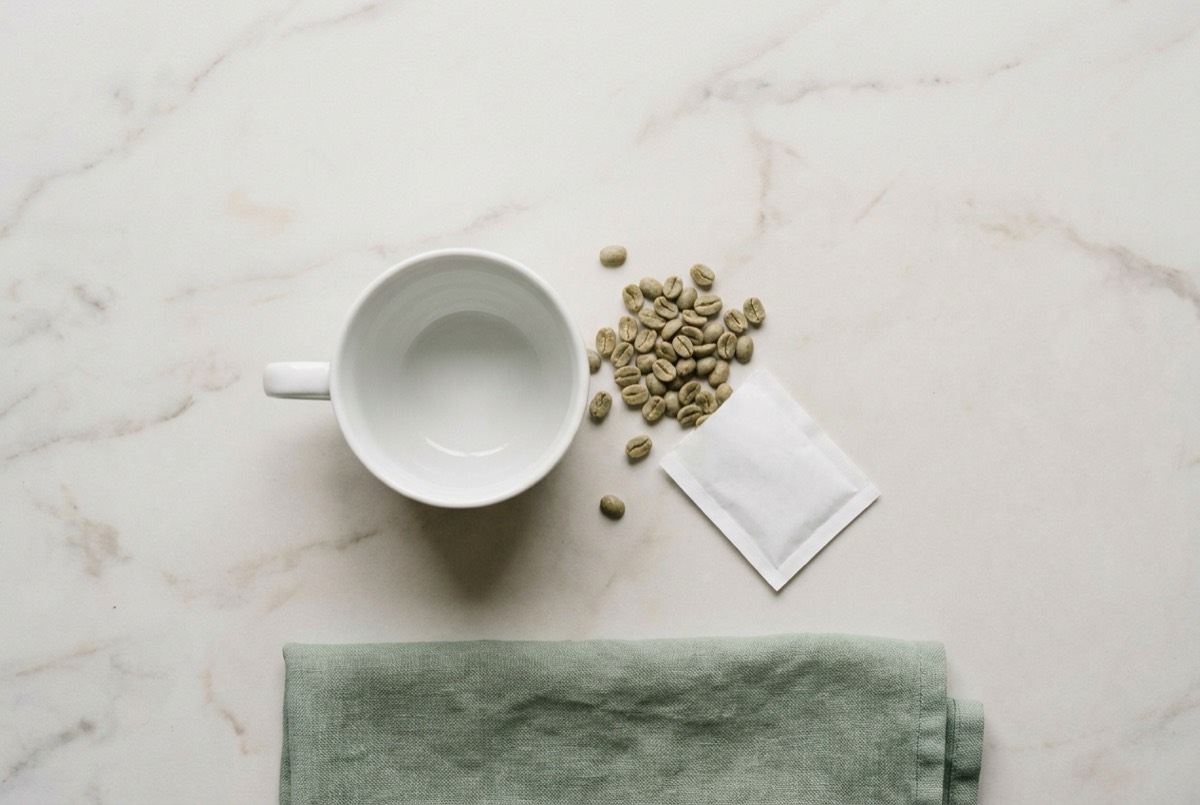
Unroasted green coffee beans contain high levels of chlorogenic acid. Roasting destroys the great majority of it, which means the cup you drink in the morning contains barely any.
That is worth noting, because chlorogenic acid is one of the most intensively studied plant compounds in relation to glucose absorption. Research links it to slower uptake of sugar in the small intestine — in other words, to precisely the flattening of the spike that matters here. Green coffee extract simply gives your morning coffee back what the roasting process removed.
Chromium: the one officially recognised claim
With most trend ingredients, the assessment stops at "promising data". Chromium is different. The contribution of chromium to the maintenance of normal blood glucose levels is an authorised health claim on the Great Britain nutrition and health claims register, carried over from the original European Food Safety Authority assessment.
That is not marketing language but a regulator-assessed statement, and in this field it is a rarity. Translated into everyday terms, steadier blood glucose means mainly one thing: less of that sudden late-afternoon urge that topples most good intentions.
L-carnitine and green tea: the thermogenic half
Blood sugar is one half of the equation. The other is whether the fat that gets released is actually burned.
L-carnitine is an amino acid derivative produced by the body with a narrowly defined role: it shuttles fatty acids into the mitochondria, where they are metabolised into energy. A meta-analysis of 37 clinical trials in Clinical Nutrition ESPEN found an association between L-carnitine supplementation and significantly reduced body weight and BMI.
Green tea polyphenols — EGCG above all — are, in combination with caffeine, one of the best-documented thermogenic pairings in metabolic research: the body measurably gives off more energy as heat. Since caffeine is already present in morning coffee, that combination arises here by itself.
Why coffee in particular?
There is an unglamorous but decisive reason the ritual matters. Behavioural researchers have observed for decades that new health habits are typically abandoned after two to three weeks — not because they do not work, but because they get forgotten.
Morning coffee, by contrast, is almost never skipped. Britons drink around 98 million cups of it a day. Attaching something to a habit that stable — researchers call it "habit stacking" — has a dramatically higher success rate than any newly introduced routine.
That explains why the format has shifted over the past few months: away from capsules and bitter teas, towards flavourless powders that dissolve without residue in a finished cup of coffee. The coffee tastes the way it always did. That is the entire point.
Is this a replacement for prescription medication?
No — and any claim to the contrary is not to be trusted. GLP-1 drugs intervene pharmacologically and substantially in appetite regulation, and produce effects that no food or supplement reproduces.
What the substances discussed here can do is something different and more modest: keep the daily blood glucose curve a little calmer and support the body in actually using fat as fuel. Realistically, that means gradual change over six to eight weeks — not 30lb in a month.
Who should be cautious
Anyone taking glucose-lowering medication should not add substances that act on the same metabolic pathway without speaking to their GP first. The same applies to thyroid conditions, pregnancy and breastfeeding, and known caffeine sensitivity — these products are, after all, combined with coffee.
If you have an existing medical condition or are taking regular medication, the usual rule applies: check with a doctor before you start.
The verdict
"Natural Ozempic" is a slogan that promises more than any substance can deliver. The blood-sugar logic underneath it, though, is not simply hype: the mechanism is well understood, the data on chlorogenic acid, chromium, L-carnitine and EGCG are solid, and in the case of chromium the claim is officially recognised.
The real advance lies less in the ingredients themselves than in how they are taken. Docked onto a habit that happens every morning anyway, a good intention becomes something you are still doing in week eight. And experience suggests that is the factor everything else hangs on.
Which combination of active ingredients is currently being stirred into the morning cup most often — and what is in it.
Check ingredients and availability →